


TL;DR:
- In Rhode Island, a real estate attorney is legally required to oversee and certify property titles during closing to protect buyers. They review contracts, conduct title searches, identify hidden risks, and coordinate all legal aspects of the transaction. Early legal involvement can prevent costly problems, with typical fees ranging from $800 to $2,500 depending on transaction complexity.
A real estate attorney is a licensed professional who handles all legal matters involved in buying, selling, and transferring property, ensuring your transaction complies with the law and your interests are protected. If you are buying or investing in property in Rhode Island, understanding what does a real estate attorney do is not optional knowledge. Rhode Island is an attorney-mandatory state, which means an attorney must examine and certify title and review deeds as part of every closing. Legal fees for these services typically range from $800 to $2,500, depending on transaction complexity. That cost buys you legal protection that no real estate agent or title company can provide on its own.
What are the main services provided by real estate attorneys?

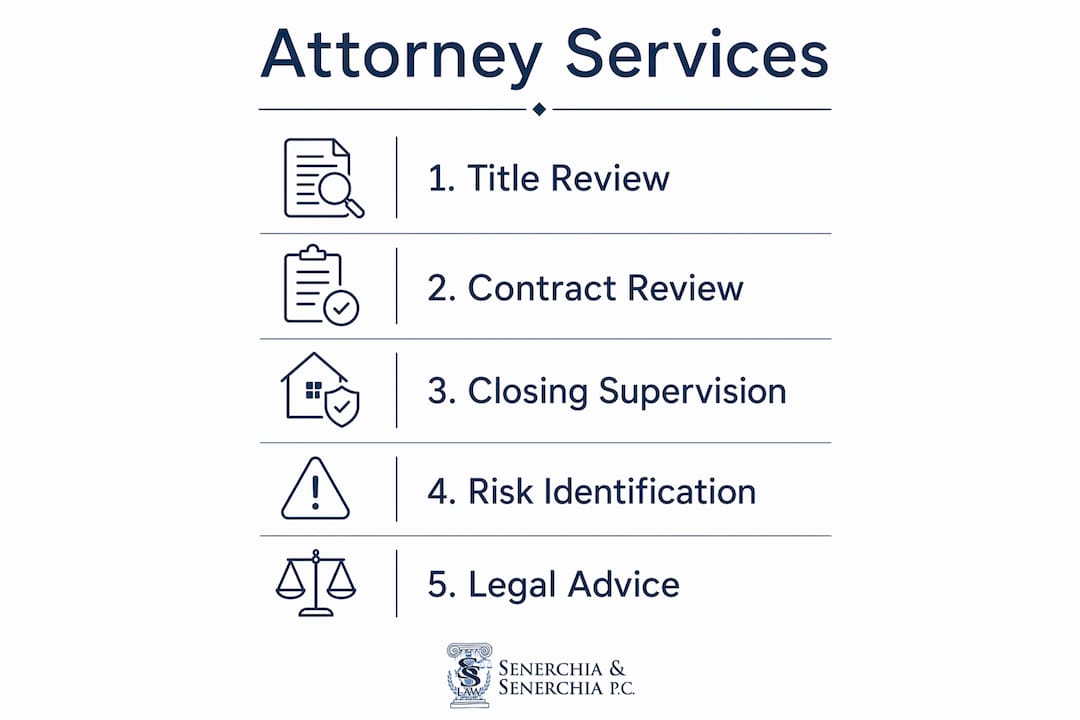
A real estate attorney covers every legal step from contract to closing. Typical services include preparing and reviewing purchase and sale agreements, conducting title searches, coordinating with lenders, and assisting with dispute resolution. Each of these tasks requires legal training that goes well beyond what a real estate agent is licensed to do.
Here is what you can expect from your attorney during a standard Rhode Island transaction:
- Contract review and drafting: Your attorney reads every line of the purchase and sale agreement, flags unfavorable terms, and negotiates changes before you sign.
- Title search and certification: The attorney searches public records to confirm the seller has clear, marketable title and no outstanding claims against the property.
- Contingency review: Your attorney confirms that financing, inspection, and appraisal contingencies are properly written to protect your deposit and your right to exit the deal.
- Closing document preparation: The attorney prepares and reviews all closing documents, verifies that terms match the original agreement, and catches errors before funds change hands.
- Coordination: Your attorney communicates with lenders, title companies, and the seller’s attorney to keep the transaction on schedule.
Attorneys also advise on title insurance policies, explaining the difference between a lender’s policy and an owner’s policy so you choose the right coverage for your situation.
Pro Tip: Ask your attorney to walk you through the title commitment before closing day. Knowing what exceptions exist in your title policy prevents surprises after you take ownership.
Why should you involve an attorney before signing contracts in Rhode Island?
The most critical moment in any real estate transaction is before you sign the purchase and sale agreement. Buyers who involve attorneys early can negotiate better terms and avoid contract traps that are nearly impossible to undo once both parties have signed.
Rhode Island contracts often include deadlines for financing, inspection, and appraisal contingencies. Missing those deadlines can cost you the right to cancel the contract without losing your deposit. That is a significant financial risk on a transaction that may involve hundreds of thousands of dollars.
Here is why timing matters so much:
- Before signing: Your attorney can add or strengthen contingencies, negotiate price reductions based on inspection findings, and identify clauses that favor the seller unfairly.
- After signing: Your options narrow considerably. Most contract changes require the seller’s written agreement, which they are not obligated to give.
- At contingency deadlines: Your attorney tracks every deadline and advises you on whether to proceed, negotiate, or exit the deal within the legally protected window.
- At closing: Your attorney reviews the final settlement statement and confirms every number matches what was agreed upon.
Pro Tip: Contact a real estate attorney as soon as you make an offer, not after it is accepted. That extra time gives your attorney room to negotiate terms before you are legally committed.
How do Rhode Island’s attorney-mandatory laws shape the closing process?
Rhode Island stands apart from most states because attorneys must examine and certify title and review deeds as a legal requirement. This is not a preference or a best practice. It is the law. The practical effect is that every closing in Rhode Island involves an attorney in a supervisory role that no other professional can fill.
Title companies cannot independently conduct closings in Rhode Island. They work alongside attorneys but cannot replace them. This distinction matters because it means the person certifying that your title is clean and your deed is properly recorded must be a licensed attorney.
The table below shows how responsibilities are divided in a Rhode Island closing:
| Role | Responsibility |
|---|---|
| Real estate attorney | Examines and certifies title, reviews deed, supervises closing |
| Title company | Issues title insurance, holds escrow funds |
| Lender | Provides loan documents, funds the mortgage |
| Buyer’s attorney | Reviews all closing documents, advises buyer on terms |
| Recording office | Records the deed and mortgage in public land records |
An attorney also attends the closing, verifies documents, manages fund transfers, and ensures deeds are properly recorded. A recording error or a missed lien at this stage can cloud your title for years. Attorney supervision at closing is the last line of defense against those problems.
What hidden risks can a real estate attorney identify before closing?
Attorneys serve as problem solvers who uncover risks that are invisible to buyers without legal training. Attorneys identify hidden risks such as liens, easements, zoning problems, and title issues that could cause costly litigation after closing. Finding these problems before you own the property is far less expensive than resolving them afterward.
Common hidden risks your attorney will look for include:
- Unpaid liens and taxes: A prior owner’s unpaid contractor bill or property tax can attach to the property and become your legal obligation after purchase.
- Easements: A neighbor may have a legal right to cross your land or use a shared driveway. Your attorney explains what that means for your plans and your property value.
- Restrictive covenants: Some deeds contain old restrictions on how the property can be used, such as prohibitions on certain structures or commercial activity.
- Zoning complications: The property’s current use may not match its zoning classification, creating legal exposure if you plan to renovate or change how it is used.
Attorneys who detect shared easements and zoning issues before closing give you the option to negotiate a price reduction, require the seller to resolve the issue, or walk away entirely. You can also learn more about how attorneys handle these situations by reviewing guidance on overcoming transaction hurdles specific to Rhode Island buyers.
What should you expect to pay for a real estate attorney in Rhode Island?
Legal fees for buyer closing services in Rhode Island typically range from $800 to $2,500, depending on the complexity of the transaction and the services your attorney provides. That range reflects real variation. A straightforward condominium purchase costs less than a multi-parcel investment property with title complications.
Factors that influence where your fees land within that range include:
- Contract drafting: Attorneys who draft the purchase and sale agreement from scratch charge more than those who review a standard form.
- Title examination complexity: Properties with long ownership histories, prior foreclosures, or multiple recorded liens require more research time.
- Closing attendance: Most Rhode Island attorneys include closing attendance in their fee, but confirm this upfront.
- Transaction type: Investment properties, commercial purchases, and short sales involve more legal work than standard residential transactions.
Budget for attorney fees as a fixed line item in your closing costs. For detailed information on what buying a home in Rhode Island actually costs from start to finish, Senerchia & Senerchia Law has published a practical breakdown for buyers in this market. You can also find guidance on IRS tax liens that may affect a property’s title, which is one more reason to have an attorney search the record thoroughly before you close.
Key Takeaways
A real estate attorney is the single most important professional protecting your legal interests in a Rhode Island property transaction, from contract review through deed recording.
| Point | Details |
|---|---|
| Attorney-mandatory state | Rhode Island law requires an attorney to certify title and supervise every closing. |
| Early involvement matters | Engage your attorney before signing to negotiate contingencies and avoid contract traps. |
| Hidden risks are real | Attorneys detect liens, easements, and zoning issues that buyers cannot find on their own. |
| Fees are predictable | Legal fees in Rhode Island typically range from $800 to $2,500 based on transaction complexity. |
| Title companies are not enough | Title companies cannot replace attorneys in Rhode Island closings — both roles are required. |
What I have learned from years of Rhode Island real estate closings
Most buyers assume their real estate agent is managing the legal side of their transaction. That assumption is wrong, and it costs people money. Agents are skilled at finding properties and negotiating price. They are not trained to read a title chain, spot a buried easement, or catch a contract clause that waives your right to an inspection. Those are legal tasks, and in Rhode Island, they require an attorney.
The buyers who come to me after a problem has already surfaced almost always say the same thing: they did not know they needed an attorney until it was too late. A lien from a prior contractor. A deed recorded with the wrong lot number. A contingency deadline that passed unnoticed. Every one of those problems was preventable with early legal involvement.
Rhode Island’s attorney-mandatory laws exist for good reason. Property ownership is one of the largest financial commitments most people make. The legal framework around it is complex, and the consequences of errors are long-lasting. My honest advice is this: treat your attorney as a core member of your transaction team from day one, not an afterthought you bring in at the closing table.
— Anthony
How Senerchia & Senerchia Law supports Rhode Island property buyers
Senerchia & Senerchia Law has guided homebuyers and investors through Rhode Island real estate transactions for years, providing contract review, title certification, and full closing supervision under one roof. The firm’s attorneys understand Rhode Island’s attorney-mandatory requirements and work proactively to identify risks before they become problems. Whether you are purchasing your first home or adding to an investment portfolio, the team at Senerchia & Senerchia Law gives you clear answers and steady legal support at every stage. To learn more about the firm’s real estate legal services in Rhode Island and Massachusetts, or to schedule a consultation, visit the firm’s website and connect with an attorney who knows this market.
FAQ
What does a real estate attorney do at closing?
An attorney reviews all closing documents, verifies that terms match the purchase agreement, manages fund transfers, and ensures the deed is properly recorded in Rhode Island’s public land records.
Do I need a real estate attorney in Rhode Island?
Yes. Rhode Island is an attorney-mandatory state, which means an attorney must examine and certify title and review deeds as part of every property closing. Title companies cannot perform this role independently.
How much does a real estate attorney cost in Rhode Island?
Legal fees for buyer closing services in Rhode Island typically range from $800 to $2,500, depending on the complexity of the transaction and the services provided.
When should I hire a real estate attorney?
The best time to hire an attorney is before you sign the purchase and sale agreement. Early involvement gives your attorney the opportunity to negotiate contingencies and protect your deposit.
What risks can a real estate attorney find that I cannot?
Attorneys detect unpaid liens, tax obligations, easements, restrictive covenants, and zoning conflicts through detailed title searches. These issues are not visible to buyers without legal training and can cause serious problems after closing.