


TL;DR:
- A will attorney is a licensed professional who drafts valid wills and guides executors through probate to ensure your wishes are fulfilled accurately. They handle legal formalities, coordinate essential documents, and support executors during estate administration to reduce errors and liabilities. Even simple estates benefit from professional guidance to prevent costly mistakes and incomplete planning.
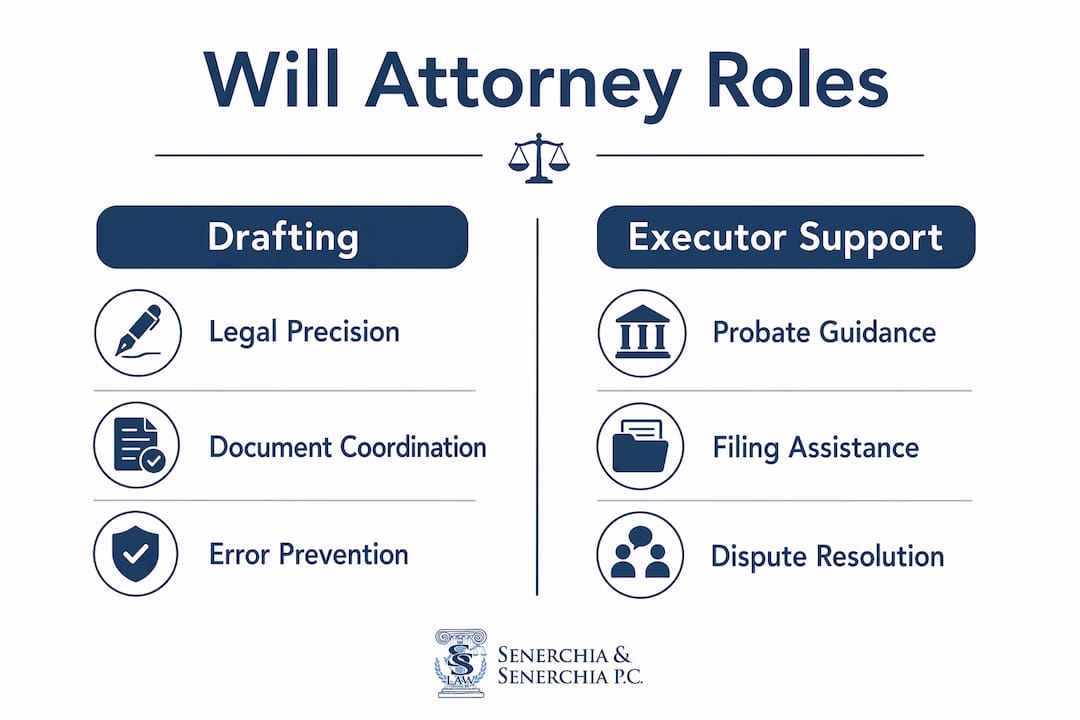
A will attorney is defined as a licensed estate planning professional who drafts legally valid wills, coordinates supporting documents, and guides executors through probate to ensure your wishes are carried out exactly as intended. Most people think hiring one is optional. It rarely is. The role of will attorney in estate planning extends far beyond putting words on paper. It covers legal compliance, family protection, executor support, and the coordination of every document that determines what happens to your assets and your loved ones when you are no longer here to speak for yourself.
What are the key responsibilities of a will attorney during drafting?
An estate planning attorney’s first job is to produce a will that holds up in court. That means drafting clear, unambiguous language that identifies your beneficiaries, describes how property is distributed, names an executor to manage your estate, and designates a guardian for any minor children. Vague wording is one of the most common reasons families end up in probate disputes, and a skilled attorney eliminates that risk at the source.

Legal formalities are where wills are most vulnerable. Most states require two disinterested witnesses to sign a will for it to be valid, a rule designed to prevent fraud. Rhode Island follows this standard, and a single procedural error, such as a witness who is also a beneficiary, can invalidate the entire document. Attorneys supervise the signing session to make sure every formality is met correctly the first time.
Beyond the will itself, estate planning attorneys draft and coordinate the full suite of documents that work alongside it: durable powers of attorney, healthcare directives, and trust agreements. Think of these documents as a team. Your will handles what happens after death. Your power of attorney handles your finances if you become incapacitated. Your healthcare directive handles your medical decisions. An attorney makes sure all three align and do not contradict each other.
DIY wills are a real risk. Common errors in self-drafted wills include missing signatures, ineligible witnesses, and asset descriptions so vague they trigger court challenges. These mistakes are entirely avoidable with professional oversight, and fixing them after the fact costs far more than getting it right initially.
Pro Tip: Ask your attorney to review your beneficiary designations on retirement accounts and life insurance policies at the same time they draft your will. Mismatches between these documents are one of the most common and costly estate planning errors families face.
How do will attorneys assist executors during probate?
Probate is the court-supervised process of validating a will, paying debts, and distributing assets to beneficiaries. It sounds straightforward, but executors, the people you name to carry out your wishes, often have no legal training and face real personal liability if they make mistakes. This is where attorney involvement reduces costly errors and delays significantly.
Here is what an estate attorney does for an executor during probate:
- Files the will with the probate court and obtains letters testamentary, the official document that gives the executor legal authority to act on behalf of the estate.
- Inventories estate assets, which includes identifying bank accounts, real property, investments, and personal property, then assigning values for court reporting.
- Notifies creditors according to legal timelines and requirements, protecting the estate from claims that surface after distributions have already been made.
- Guides creditor payment priority, a step that matters more than most people realize. Federal law mandates a specific order in which estate debts must be paid. Executors who pay the wrong creditors first can face personal financial liability for the shortfall.
- Manages final distributions to beneficiaries in compliance with both the will’s instructions and applicable tax obligations.
The table below shows how attorney-assisted probate compares to executor-only probate across key risk areas:
| Risk area | Without attorney | With attorney |
|---|---|---|
| Will filing errors | High risk of rejection or delay | Attorney handles court filing correctly |
| Creditor notification | Easy to miss deadlines | Attorney tracks legal timelines |
| Executor liability | Personal exposure if debts paid incorrectly | Attorney guides payment priority |
| Asset distribution disputes | Common without clear legal oversight | Reduced through documented compliance |
| Overall timeline | Often extended by procedural mistakes | Shorter due to correct first-time filings |
Executors are not expected to be lawyers. But they are held to a legal standard regardless. Having an attorney alongside them during probate administration is not a luxury. It is the most direct way to protect both the estate and the executor personally.
Why is a will alone often insufficient for complete estate planning?
A will is a powerful document, but it only controls what is called your probate estate. That means it governs assets titled in your name alone, with no beneficiary designation attached. Retirement accounts like IRAs and 401(k)s, life insurance policies, and jointly owned property all pass outside probate through beneficiary designations or operation of law. Your will has no authority over them.
This distinction matters enormously. If your will leaves everything to your children but your IRA still names your ex-spouse as beneficiary, your ex-spouse receives the IRA. The will cannot override it. Attorneys coordinate beneficiary designations with the overall estate plan to prevent exactly this kind of unintended outcome.
A complete family estate plan typically includes several documents working together:
- A last will and testament to direct probate assets and name guardians for minor children
- A durable power of attorney to authorize a trusted person to manage your finances if you become incapacitated
- A healthcare directive (also called a living will or healthcare proxy) to document your medical wishes and name someone to make decisions on your behalf
- Revocable or irrevocable trusts to hold assets outside of probate, provide asset protection, and in some cases reduce estate tax exposure
Trusts deserve special attention. Think of a revocable living trust as a container that holds your assets during your lifetime and transfers them directly to your beneficiaries after death, bypassing probate entirely. Attorneys design trusts to match your specific goals, whether that means protecting a child with special needs, shielding assets from creditors, or minimizing tax liability across generations.
The function of a will lawyer in this context is not just drafting. It is architecture. They design a plan where every document serves a purpose and no document contradicts another.
What factors determine when to hire a will or estate planning attorney?
Not every estate is the same, and the complexity of your situation should drive how much professional help you seek. That said, the threshold for needing an attorney is lower than most people assume.
Simple estates with straightforward family structures and modest assets may seem manageable without legal help. But even in those cases, a single missed formality can invalidate a will and send the estate through intestate succession, meaning state law decides who gets what rather than you. The importance of estate attorneys becomes clearest when you see what happens to families who skipped the step.
The following situations make professional legal guidance not just helpful but necessary:
- Blended families, where children from prior relationships may have competing claims on assets
- Special needs dependents, where a standard inheritance could disqualify a child from government benefits like Medicaid or SSI without a properly drafted special needs trust
- Multi-state property ownership, which triggers probate in each state where real estate is held
- Business ownership, where succession planning requires coordination between the estate plan and the business’s operating or shareholder agreements
- Significant assets or tax exposure, where irrevocable trusts and gifting strategies may reduce estate tax liability
Attorney fees for estate planning range from $700 to $7,500 depending on plan complexity and location. Flat fee arrangements covering wills, trusts, powers of attorney, and healthcare directives offer predictable costs and are common among estate planning firms. Hourly billing is more typical for complex or contested matters.
| Estate situation | Recommended approach |
|---|---|
| Single adult, simple assets | Basic will and healthcare directive with attorney review |
| Married couple with children | Full plan: will, trust, powers of attorney, healthcare directives |
| Blended family or special needs | Attorney-designed trust and coordinated beneficiary review |
| Business owner | Estate plan integrated with business succession documents |
| Multi-state property owner | Attorney in primary state coordinating with local counsel |
Pro Tip: When interviewing estate planning attorneys, ask specifically whether they will supervise the will signing in person or via video. Remote supervision is now accepted in Rhode Island, but the attorney must confirm the process meets state execution requirements.
Key takeaways
A will attorney’s role in estate planning covers legal drafting, document coordination, executor support, and probate guidance. Without that expertise, even a well-intentioned plan can fail at the moment it matters most.
| Point | Details |
|---|---|
| Will drafting requires legal precision | Attorneys ensure wills meet state formalities, preventing invalidation due to witness or signature errors. |
| Executors need legal support | Attorneys guide executors through probate filing, creditor payment order, and final distributions to avoid personal liability. |
| Wills only cover probate assets | Retirement accounts and beneficiary-designated assets require separate coordination with the overall estate plan. |
| A complete plan includes multiple documents | Powers of attorney, healthcare directives, and trusts work alongside the will to cover incapacity and non-probate assets. |
| Attorney fees are predictable | Flat fee arrangements typically cover the full suite of estate planning documents, making costs manageable and transparent. |
Plan your estate with Senerchia & Senerchia Law
At Senerchia & Senerchia Law, we help Rhode Island families and individuals build estate plans that actually work when they are needed most. Our attorneys draft wills, trusts, powers of attorney, and healthcare directives tailored to your family’s specific circumstances. We also guide executors through every stage of probate and estate administration, reducing the risk of delays, disputes, and personal liability. Whether you are starting your first plan or updating one after a major life change, we provide clear, practical counsel without the confusion. Visit our estate planning services page to learn more or schedule a consultation with our team today.
FAQ
What does a will attorney do exactly?
A will attorney drafts legally valid wills, ensures compliance with state execution requirements, and coordinates the will with powers of attorney, healthcare directives, and trusts to form a complete estate plan. Their role also extends to supporting executors during probate.
Can I write my own will without an attorney?
You can, but DIY wills frequently contain errors like missing signatures or ineligible witnesses that can invalidate the document entirely. An attorney supervises the signing process and confirms every legal formality is met.
What is the difference between a will attorney and an estate planning attorney?
The terms are often used interchangeably. An estate planning attorney handles wills along with the broader set of documents, including trusts, powers of attorney, and healthcare directives, that make up a complete plan.
How much does an estate planning attorney cost?
Attorney fees for estate planning range from $700 to $7,500 depending on complexity and location. Flat fee arrangements covering the full document suite are common and offer more predictable budgeting than hourly billing.
Do I need an attorney if my estate is small?
Yes. Even modest estates require properly executed wills to avoid intestate succession, where state law determines asset distribution rather than your own wishes. An attorney confirms your documents meet Rhode Island’s legal requirements.