


TL;DR:
- Starting estate planning early ensures your children are legally protected through guardianship, assets, and healthcare directives. Failing to do so risks court decisions that may not align with your wishes, increasing probate costs and delaying asset transfer. Regular reviews and proper documentation, including wills, powers of attorney, and beneficiary designations, are essential for comprehensive family protection.
Early estate planning is the legal process of arranging guardianship, assets, and financial protections so your children are cared for if you cannot be there. Most parents assume this is something to handle “later,” but waiting creates real legal risk. Without a signed will and proper documents in place, a judge decides who raises your children and how your assets are distributed. That outcome rarely matches what you would have chosen. A complete family estate plan includes a will, powers of attorney, healthcare directives, and beneficiary designations. Together, these documents form the legal foundation that keeps your children protected.
What documents and roles secure children’s future through early estate planning?
A basic estate plan for parents includes four core documents: a will, a durable financial power of attorney, a healthcare power of attorney, and a healthcare directive. Each one serves a distinct purpose, and missing even one creates a gap that courts or state law will fill on your behalf.

The will is where you nominate a guardian for your minor children. This is the single most important function of a will for young parents. Without it, courts appoint guardians based on state law, not your preferences. The will also directs how your assets pass to your children and names an executor, the person responsible for carrying out your wishes.
Powers of attorney authorize a trusted person to manage your finances or make healthcare decisions if you become incapacitated. A durable financial power of attorney covers bank accounts, bills, and property. A healthcare power of attorney designates someone to speak for you medically. Powers of attorney prevent the need for costly court-supervised guardianship proceedings during a crisis.
Beneficiary designations on life insurance policies, retirement accounts like 401(k)s and IRAs, and payable-on-death bank accounts pass assets directly to named individuals outside of probate. These designations override your will entirely, which means an outdated form naming an ex-spouse or deceased parent can redirect assets away from your children.
The key roles in your plan are the executor, the trustee, and the guardian. The executor administers your estate after death. The trustee manages assets held in trust for your children. The guardian raises your children. These can be the same person or different people, and choosing them carefully is one of the most personal decisions in the entire process.
Pro Tip: Name a backup guardian and a backup executor in your will. Life changes, and your first choice may not be available when the time comes.
How does early estate planning reduce probate costs for your children?
Probate is the court-supervised process of validating a will and distributing assets. It is public, time-consuming, and expensive. Probate costs range from 2% to 7% of the gross estate value, depending on the state. For a family with a $500,000 estate, that means $10,000 to $35,000 in fees before your children receive a single dollar.
One detail that surprises many families is that probate fees apply to gross estate value, not the net value after debts. A home worth $400,000 with a $300,000 mortgage still generates probate fees based on the full $400,000. That distinction matters enormously when estimating what your children will actually inherit.
The good news is that several legal tools reduce or eliminate probate exposure entirely. Here is how they compare:
| Strategy | How it works | Probate impact |
|---|---|---|
| Revocable living trust | Holds assets during life; transfers at death without court | Eliminates probate for trust assets |
| Beneficiary designations | Names recipients directly on accounts and policies | Bypasses probate entirely |
| Joint ownership with rights of survivorship | Co-owner inherits automatically at death | Avoids probate for that asset |
| Will alone | Directs distribution but requires court validation | Full probate process applies |
A revocable living trust acts like a container that holds your assets during your lifetime and transfers them to your children at death without court involvement. Living trusts also allow you to stagger distributions, so a 19-year-old does not receive a large inheritance all at once. You can specify that funds are released at age 25, or in stages tied to milestones like finishing college.
Pro Tip: Even with a trust, keep a “pour-over will” in place. It captures any assets you forgot to transfer into the trust and directs them there at death, preventing them from passing through intestate succession.
For families concerned about hidden legal fees in the estate process, proactive planning with a qualified attorney is the most reliable way to control costs before they arise.
What steps should parents take to start an effective estate plan?
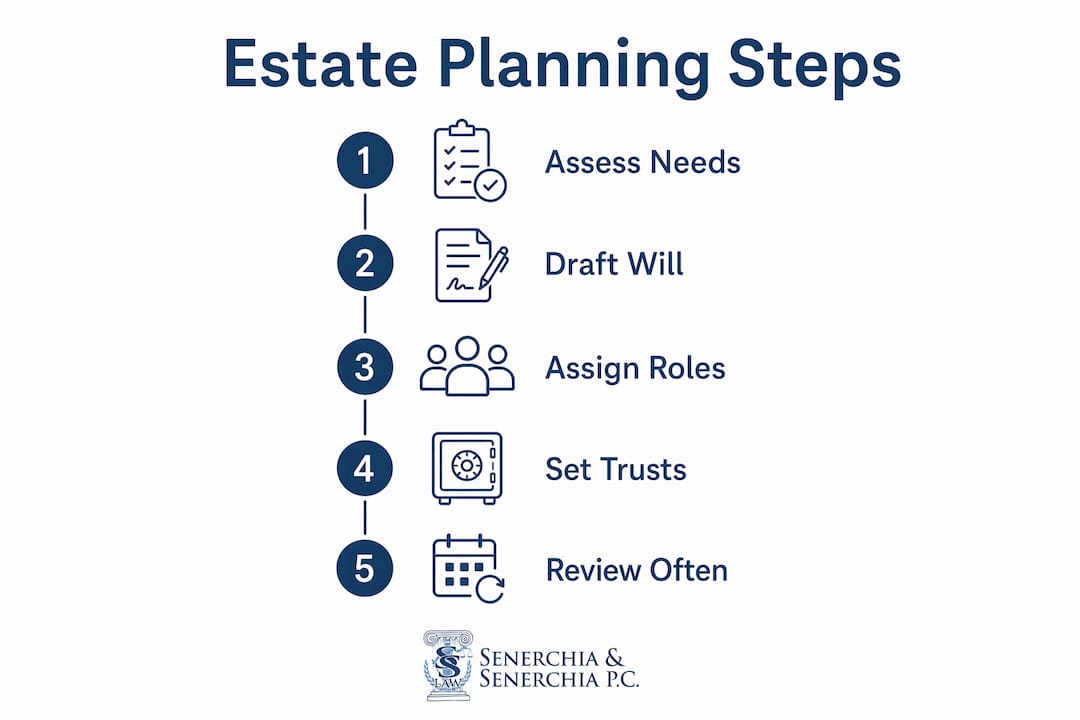
Starting an estate plan feels overwhelming to most parents, but the process becomes manageable when broken into clear steps. Here is a practical sequence to follow:
- Choose your guardian. Decide who would raise your children if both parents were gone. Have that conversation with the person before naming them.
- Draft or update your will. Work with an estate planning attorney to create a legally valid will that names your guardian, executor, and asset distribution plan.
- Review all beneficiary forms. Pull the beneficiary designations on every life insurance policy, 401(k), IRA, and bank account. Update any that are outdated or missing.
- Sign powers of attorney. Execute both a durable financial power of attorney and a healthcare power of attorney. These documents only work if they are signed before incapacity occurs.
- Create a healthcare directive. Also called a living will, this document specifies your medical wishes if you cannot communicate them yourself.
- Evaluate your life insurance coverage. Calculate whether your current policy would cover childcare, education, and living expenses for your children through adulthood.
- Organize and communicate. Store your documents in a secure, accessible location and tell your executor and guardian where to find them.
Once your plan is in place, the work is not finished. Estate plans require review every three to five years and after any major life event. Births, marriages, divorces, deaths, relocations to a new state, and significant changes in assets all trigger the need for a review.
The following life events should prompt an immediate update:
- Birth or adoption of a child
- Death of a named guardian, executor, or trustee
- Marriage or divorce
- Moving to a different state, since estate laws vary significantly
- Receiving a large inheritance or selling a major asset
- A child reaching adulthood and no longer needing a guardian
Pro Tip: Set a recurring calendar reminder every three years labeled “estate plan review.” Treat it like a medical checkup. The documents you signed five years ago may not reflect your family’s current reality.
Scheduled reviews and event-triggered updates prevent plans from becoming outdated in ways that directly harm your children’s security. An estate plan that named your college roommate as guardian before you had children is a liability, not a protection.
What mistakes should parents avoid when planning for their children’s future?
The most costly estate planning mistakes are not dramatic errors. They are quiet omissions that only surface during a crisis. Knowing what to avoid is just as important as knowing what to do.
-
Failing to name a guardian in your will. This is the most common and most consequential mistake parents make. Without a named guardian, a judge decides who raises your children. That decision may not align with your values, your family relationships, or your children’s needs.
-
Leaving beneficiary designations outdated. Beneficiary forms override wills, so an old designation on a life insurance policy or retirement account can redirect assets away from your children entirely. Review these forms every time your family situation changes.
-
Skipping incapacity planning. Many parents focus only on what happens after death and ignore what happens if they are alive but unable to make decisions. Without powers of attorney, your family may need to petition a court for guardianship authority, which is expensive and slow.
-
Ignoring state law differences. Estate laws vary by state. A will or trust drafted in Massachusetts may need adjustments if you move to Rhode Island. Probate procedures, spousal rights, and trust regulations differ across state lines.
-
Relying on DIY documents. Online will templates are inexpensive, but they frequently miss state-specific requirements, fail to address trust provisions for minor children, and create ambiguities that courts must resolve. The common mistakes families make with DIY documents often cost far more to fix than a professionally drafted plan would have cost upfront.
-
Delaying the first plan indefinitely. No estate plan is perfect on the first draft, and waiting for the “right time” means your children have no protection in the meantime. A basic plan created today is far better than a perfect plan created never.
How Senerchia & Senerchia Law helps you protect your family
At Senerchia & Senerchia Law, we work with parents and guardians throughout Rhode Island and Southern New England to build estate plans that genuinely protect their children. We help you choose the right documents, name the right people, and structure your assets to minimize probate costs and legal delays. Whether you are starting from scratch or updating a plan that no longer fits your family, our attorneys provide clear guidance at every step. We also help you understand how Rhode Island and Massachusetts law affects your specific situation, so nothing falls through the cracks. If you are ready to take action, start your family estate plan with our team today. You can also explore the estate planning services we offer for families at every stage.
Key takeaways
Early estate planning gives parents legal control over who raises their children and how assets are distributed, preventing courts from making those decisions by default.
| Point | Details |
|---|---|
| Name a guardian in your will | Without a named guardian, a judge decides who raises your children under state law. |
| Beneficiary forms override wills | Outdated designations on retirement accounts and life insurance redirect assets away from your children. |
| Probate costs 2% to 7% of gross estate | Trusts and beneficiary designations reduce or eliminate probate exposure for your children’s inheritance. |
| Review your plan every 3 to 5 years | Life events like births, divorces, and state moves require immediate updates to keep your plan effective. |
| Powers of attorney cover incapacity | Durable financial and healthcare powers of attorney protect your family if you are alive but unable to decide. |
FAQ
What is the most important document for parents in an estate plan?
A will that names a legal guardian for your minor children is the single most critical document for parents. Without it, a court appoints a guardian based on state law rather than your wishes.
Can a trust replace a will for children’s inheritance planning?
A trust controls assets held within it, but a will is still needed to name a guardian and capture any assets not transferred into the trust. Most attorneys recommend using both together.
How often should parents update their estate plan?
Parents should review their estate plan every three to five years and immediately after major life events such as the birth of a child, a divorce, or a move to a new state.
Do beneficiary designations affect what my children inherit?
Yes. Beneficiary designations on life insurance, IRAs, and 401(k)s pass assets directly to named individuals and override your will entirely. Keeping these forms current is a critical part of children’s future planning.
What happens if I die without an estate plan in Rhode Island?
Dying without a will means dying “intestate,” and Rhode Island’s intestacy laws determine how your assets are distributed. A court also appoints a guardian for your minor children, with no input from you.