


TL;DR:
- A probate attorney guides executors and beneficiaries through estate settlement, reducing legal risks and errors. They handle court filings, asset inventories, creditor claims, and asset distributions while ensuring deadlines are met. Hiring a lawyer is especially important for complex estates, contested wills, or first-time executors in Rhode Island.
A probate attorney is a licensed legal professional who guides executors and beneficiaries through the court-supervised process of settling a deceased person’s estate. The role of probate attorney explained simply: they manage the legal, financial, and procedural steps required to transfer assets, pay debts, and close an estate under Rhode Island law. Without this guidance, executors face personal liability for errors that can result in real financial consequences. Senerchia & Senerchia Law works with Rhode Island families every day to make this process clear, lawful, and as smooth as possible.
What are the primary duties of a probate attorney in Rhode Island?
Probate attorney duties cover every stage of estate administration, from the first court filing to the final distribution of assets. Understanding these responsibilities helps you know exactly what you are paying for and why the work matters.
A probate attorney’s core responsibilities include:
- Validating the will and filing with the court. The attorney submits the original will to the appropriate Rhode Island probate court and handles all required paperwork to open the estate. Attorney duties span court filings, asset inventories, creditor management, and beneficiary distributions.
- Creating a complete asset inventory. The attorney identifies, catalogs, and arranges valuations for all estate property, including real estate, bank accounts, investments, and personal property.
- Managing creditor claims. Rhode Island law requires proper notice to creditors. The attorney tracks the creditor claim window, reviews submitted claims, and advises the executor on which debts to pay and in what order.
- Overseeing asset distribution. Once debts are settled, the attorney prepares the legal documents needed to transfer property to each beneficiary according to the will or Rhode Island intestacy law.
- Resolving disputes. When heirs disagree or a will is challenged, the attorney represents the estate’s interests and works toward a lawful resolution.
- Protecting the executor from personal liability. Executors who pay debts in the wrong order or miss a legal deadline can be held personally responsible for the resulting losses. An attorney prevents those mistakes before they happen.
Pro Tip: Keep a dedicated folder for every document the attorney requests, including bank statements, deeds, and insurance policies. Organized records cut weeks off the administration timeline.
The executor’s role is demanding, especially for someone who has never done it before. A probate attorney functions as both a legal guide and a practical project manager, keeping the estate on track and the executor protected.

How does a probate attorney help with Rhode Island’s probate requirements?
Rhode Island probate has specific timelines and procedural rules that differ from other New England states. Missing a single deadline can delay the entire process or expose the executor to liability.
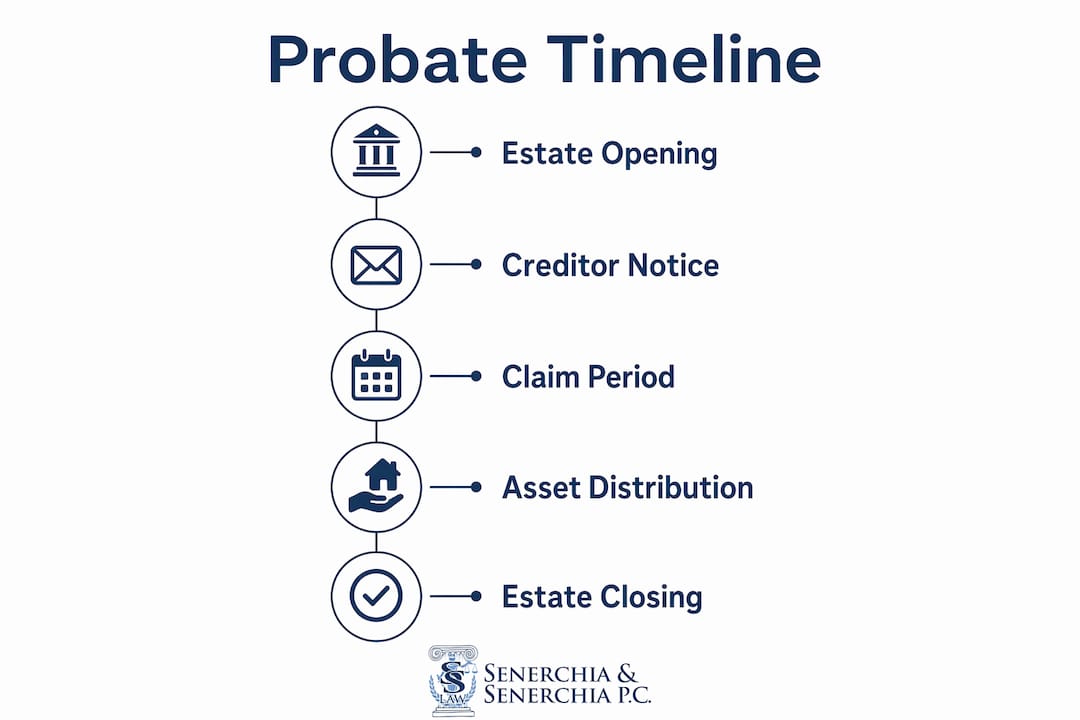
The standard probate timeline in Rhode Island runs 9–18 months for a straightforward estate. That range reflects the time needed to publish creditor notices, wait out the claim period, resolve any disputes, and complete the court’s final accounting requirements.
| Stage | Typical timeframe |
|---|---|
| Opening the estate and filing the will | 1–4 weeks |
| Creditor notice publication and claim window | 6 months |
| Asset inventory and appraisal | 1–3 months |
| Debt payment and tax clearance | 1–3 months |
| Final accounting and asset distribution | 1–3 months |
The creditor claim window is exactly 6 months after the first publication of notice. Missing that window does not eliminate creditor rights automatically. An attorney tracks the publication date, monitors incoming claims, and advises the executor on proper responses.
Contested or multi-state estates routinely exceed the standard 9–18 month range. A Rhode Island family dealing with a vacation property in Massachusetts, for example, may need to open ancillary probate proceedings in a second state. An attorney with New England experience handles both jurisdictions without the family needing to hire two separate legal teams.
Pro Tip: Ask your attorney to set calendar reminders for every statutory deadline at the start of the engagement. Rhode Island probate courts have little tolerance for missed filing dates.
Common pitfalls that attorneys prevent include failing to notify all known creditors, distributing assets before the creditor window closes, and filing incomplete inventories with the court. Each of these errors can restart the clock or trigger personal liability for the executor.
When should Rhode Island families hire a probate attorney?
Rhode Island does not legally require an attorney for probate, but executors face personal liability for mistakes like paying debts in the wrong order or missing creditor deadlines. That risk alone makes professional guidance worth serious consideration.
Families should strongly consider hiring a probate attorney in these situations:
- The estate includes real property. Transferring title to real estate requires precise legal documentation. Errors in deeds can cloud title for years.
- The will is contested. Any heir or creditor who disputes the will’s validity triggers litigation. An attorney manages the court proceedings and protects the estate.
- The estate has significant debts or tax obligations. Estates with outstanding mortgages, business liabilities, or potential estate tax exposure require careful sequencing of payments. For estates with complex tax issues, consulting a tax professional alongside your probate attorney is wise. Rhode Island families can find tax relief guidance specific to the state when federal and state tax questions arise.
- The deceased owned property in multiple states. Multi-state estates require coordination across different probate courts and legal systems.
- You are a first-time executor. The learning curve for probate administration is steep. An attorney reduces the risk of costly errors during a period that is already emotionally difficult.
Self-representation is permitted but carries real risk. Most Rhode Island probate attorneys offer free initial consultations, which means you can assess your situation and get professional input before committing to anything. The Rhode Island Bar Association provides a lawyer referral service to help families locate qualified probate attorneys when they are not sure where to start.
How does a probate attorney work with executors and beneficiaries?
A probate attorney acts as an advocate for both the executor and the beneficiaries, ensuring the estate is administered lawfully and transparently. Attorneys ensure lawful, fair estate settlement and manage disputes among heirs when they arise.
The attorney’s communication role includes:
- Explaining legal obligations to the executor. Many executors do not know what they are legally required to do or when. The attorney translates court requirements into plain language and actionable steps.
- Keeping beneficiaries informed. Beneficiaries have a legal right to information about the estate. The attorney helps the executor communicate updates in a way that satisfies legal requirements and reduces family tension.
- Reviewing financial accounts. Before the estate closes, the attorney reviews the executor’s accounting to confirm that all income, expenses, and distributions are properly documented.
- Resolving heir disputes. When family members disagree about asset values, distribution timing, or the will’s interpretation, the attorney provides a neutral legal framework for resolution.
- Facilitating the final distribution. The attorney prepares deeds, assignment documents, and court filings needed to formally transfer each asset to its intended recipient.
Understanding how probate works in Rhode Island helps both executors and beneficiaries set realistic expectations from the start.
Key Takeaways
A probate attorney is the executor’s most important protection against personal liability, procedural errors, and family disputes during Rhode Island estate administration.
| Point | Details |
|---|---|
| Core probate attorney duties | Attorneys manage court filings, asset inventories, creditor claims, and final distributions. |
| Rhode Island timeline | Standard probate runs 9–18 months, with a strict 6-month creditor claim window. |
| Executor liability risk | Executors face personal financial responsibility for errors; attorneys prevent costly mistakes. |
| When to hire an attorney | Contested wills, real property, multi-state assets, and first-time executors all warrant professional help. |
| Free initial consultations | Most Rhode Island probate attorneys offer no-cost first meetings to assess your situation. |
What I’ve learned from watching families navigate probate alone
Most families who try to handle probate without an attorney do not fail because the law is too complicated. They fail because they do not know what they do not know. An executor who misses the creditor publication requirement, for example, may not realize the error until a creditor surfaces months later with a valid claim. By then, the assets may already be distributed.
The other pattern I see regularly is families underestimating how much Rhode Island’s local probate court procedures vary by municipality. Each town has its own forms, filing preferences, and informal expectations. An attorney who practices regularly in Providence probate court knows things that no online guide will tell you.
My honest advice: even if your estate is simple, a one-hour consultation with a qualified Rhode Island probate attorney is worth every minute. You will either confirm that you can handle it yourself or discover the one issue that would have cost you far more to fix later. Settling a loved one’s estate is hard enough emotionally. Do not make it harder by going in unprepared.
— Anthony
Probate support from Senerchia & Senerchia Law
Senerchia & Senerchia Law has guided Rhode Island families through probate and estate administration for years, combining deep knowledge of local court procedures with a genuinely personal approach. Whether you are a first-time executor, a beneficiary with questions, or a family dealing with a contested estate, the firm provides clear guidance at every step. You can start with a consultation to understand your obligations before making any decisions. After probate closes, the firm also helps families address estate planning documents to protect the next generation. For dedicated Rhode Island probate attorney services, contact Senerchia & Senerchia Law to schedule your consultation today.
FAQ
What does a probate attorney do in Rhode Island?
A probate attorney manages court filings, asset inventories, creditor claims, and asset distributions on behalf of the executor and estate. They also protect the executor from personal liability for procedural errors.
How long does Rhode Island probate take?
Rhode Island probate typically takes 9–18 months for a standard estate. Contested estates or those involving multi-state property often take longer.
Is a probate attorney required in Rhode Island?
Rhode Island does not legally require an attorney for probate, but executors carry significant personal liability for errors, making professional legal guidance strongly advisable.
When does the creditor claim window close in Rhode Island?
The creditor claim window closes exactly 6 months after the first publication of the creditor notice. Missing this deadline can create serious legal complications for the executor.
How do I find a qualified probate attorney in Rhode Island?
The Rhode Island Bar Association offers a lawyer referral service to help families locate qualified probate attorneys. Most Rhode Island probate attorneys also offer free initial consultations.