


TL;DR:
- A living trust in Rhode Island allows you to transfer assets directly to beneficiaries without probate, saving time and maintaining privacy. Proper creation involves selecting the right trust type, funding it with all assets, choosing trustworthy trustees, and ensuring notarization and recording of deed transfers. Avoid common mistakes such as failing to fund the trust or not appointing a successor trustee to protect your estate plan effectively.
A living trust is a legal document that holds your assets during your lifetime and transfers them to your beneficiaries without going through probate. Knowing how to set up a living trust in Rhode Island gives you direct control over what happens to your home, savings, and personal property when you pass away or become incapacitated. This guide walks you through every step: choosing your trust type, organizing your assets, selecting trustees, drafting and notarizing the document, and funding the trust correctly. Follow these steps and you will have a solid estate plan built on Rhode Island law.
What is a living trust and why should rhode island residents use one?

A living trust is a container that holds your assets while you are alive. You create it, you control it, and you name who receives what after you are gone. Unlike a will, a living trust does not go through the Rhode Island probate court process, which saves your family time, money, and public exposure of your estate.
Rhode Island residents benefit from a living trust in several specific ways:
- Probate avoidance. Assets held in a trust pass directly to beneficiaries without court involvement.
- Incapacity protection. If you become unable to manage your affairs, your successor trustee steps in immediately without a court order.
- Privacy. Wills become public record through probate. Trusts stay private.
- Control over distribution. You can set conditions on when and how beneficiaries receive assets.
Understanding the difference between a living trust vs a will matters before you choose your path. A will directs asset distribution after death but requires probate. A trust operates outside the court system entirely.
Rhode Island recognizes two main trust structures. Joint living trusts are suited for married couples who want to combine assets under one document. Individual trusts are the standard choice for unmarried persons or those with separate financial interests. Choosing the right structure from the start prevents complications later.
Pro Tip: If you own real estate in Rhode Island and want to avoid a lengthy probate process for your heirs, a living trust is one of the most direct tools available to you.
What assets can you include in a rhode island living trust?
A living trust can hold most types of property you own. Knowing what qualifies and gathering the right documents before you draft the trust saves significant time during the funding stage.
Common assets placed into a Rhode Island living trust include:
- Real estate (your primary home, rental properties, vacation property)
- Bank and savings accounts
- Investment and brokerage accounts
- Personal property (vehicles, jewelry, artwork, collectibles)
- Business interests in certain structures
Asset titling and ownership documentation is the most overlooked part of trust setup. You need the actual deed for real estate, account statements showing ownership, and vehicle titles before you can transfer anything. Missing documents cause delays and errors that can leave assets outside the trust entirely.
Pro Tip: SmartAsset advises gathering ownership documentation first to make the transfer process go smoothly. Create a simple spreadsheet listing every asset, its estimated value, and where the ownership document is located.
Here is a quick reference for asset types and what documentation you need:
| Asset Type | Documentation Required | Transfer Method |
|---|---|---|
| Rhode Island real estate | Current deed, property tax record | New trustee’s deed recorded with town/city |
| Bank accounts | Account statements, bank contact info | Re-title account at your bank |
| Investment accounts | Brokerage statements | Contact broker to retitle or assign |
| Vehicles | Title certificate | DMV retitling process |
| Personal property | Written inventory or appraisal | Assignment of property document |
One common challenge is that some financial institutions require their own internal forms to retitle accounts into a trust. Call your bank or brokerage before you finalize the trust document so you know exactly what they will ask for.
How do you choose the right trustee in rhode island?
The trustee is the person who manages the trust assets for the benefit of your named beneficiaries. Choosing the right person for this role is one of the most consequential decisions in the entire process.
Most Rhode Island residents name themselves as the initial trustee of a revocable living trust. This lets you keep full control of your assets during your lifetime. Rhode Island relies on common law fiduciary duties and the Uniform Prudent Investor Act to define how a trustee must act. The standard is prudence and impartiality, meaning the trustee must manage assets carefully and treat all beneficiaries fairly.
Consider these factors when selecting your trustee and successor trustee:
- Trustworthiness and financial literacy. The trustee will handle real estate, accounts, and legal filings.
- Availability. A successor trustee must be ready to act quickly if you become incapacitated or pass away.
- Willingness to serve. Always ask the person before naming them.
- Conflict of interest. Naming a beneficiary as trustee can create tension. Consider a neutral third party for complex estates.
Choosing a self-trustee requires naming a successor trustee who takes over management upon your incapacity or death. Without a named successor, the trust can stall and may require court intervention to appoint a replacement. That defeats the purpose of creating the trust in the first place.
Rhode Island does not require a corporate trustee for most revocable trusts. However, for large or complex estates, a professional trustee such as a bank trust department or a licensed fiduciary can provide continuity and expertise that a family member may not.
Step-by-step: how to create and fund your living trust in rhode island
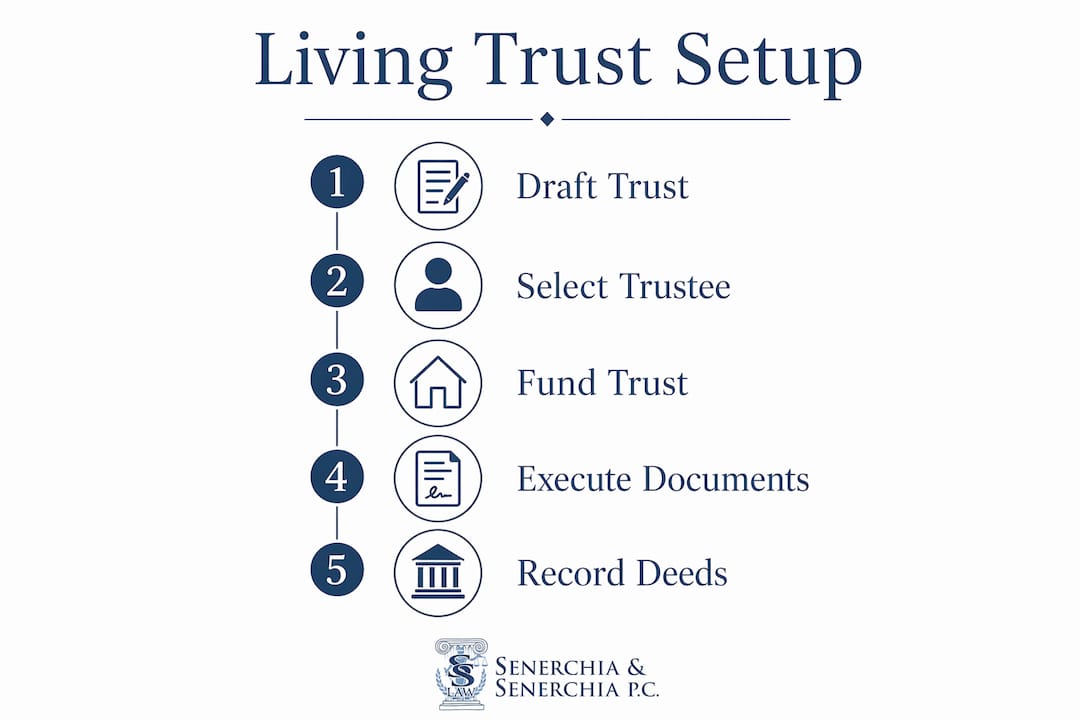
The complete setup process requires five clear stages. Skipping any one of them leaves the trust incomplete or unenforceable.
- Decide on the trust type. Choose between an individual revocable trust or a joint trust for married couples. This decision shapes the entire document structure.
- Draft the trust document. You can use an online template or work with a Rhode Island trust attorney. For estates with multiple properties, business interests, or blended family situations, legal assistance is strongly advisable to avoid errors that are expensive to fix later.
- Sign and notarize the document. Notarization is required for the trust document to be recognized in Rhode Island. Notary fees typically start around $10. You will also need a witness present at signing in most cases.
- Transfer assets into the trust. This is called “funding” the trust. A trust that is not funded is essentially an empty shell. For Rhode Island real estate, transferring property into a trust requires a trustee’s deed that is signed, notarized, and recorded with the appropriate city or town clerk’s office.
- Update beneficiary designations. Life insurance policies and retirement accounts like IRAs and 401(k)s typically pass by beneficiary designation, not through the trust. Review these separately and update them to align with your overall estate plan.
Here is a comparison of the two main drafting approaches:
| Drafting Method | Cost Range | Best For | Risk Level |
|---|---|---|---|
| DIY online template | $50–$200 | Simple estates, single property | Higher if errors occur |
| Rhode Island trust attorney | $1,000–$3,000+ | Complex estates, multiple assets | Lower with professional review |
Pro Tip: After recording your trustee’s deed with the city or town clerk, request a certified copy and keep it with your trust document. You will need it if you ever sell or refinance the property.
What are the most common mistakes when setting up a living trust?
The most damaging error in living trust setup is creating the document and never funding it. Common mistakes include failing to transfer assets to the trust, not naming a successor trustee, and ignoring notarization requirements. Each of these errors can send your estate straight into probate, which is exactly what the trust was designed to prevent.
Watch for these specific pitfalls:
- Unfunded trust. You sign the document but never retitle your home or accounts. The trust has no legal effect over those assets.
- No successor trustee named. If you become incapacitated and there is no named successor, a court must appoint one.
- Notarization skipped. Rhode Island requires notarization for the trust to be valid. An unnotarized trust can be challenged or rejected.
- Outdated trust document. Life changes like marriage, divorce, new children, or major asset purchases require trust amendments.
Amending a revocable living trust in Rhode Island is straightforward. You create a written amendment, sign it, and have it notarized. You do not need to rewrite the entire document for most changes. Revoking the trust entirely requires a written revocation signed and notarized, followed by retitling all trust assets back into your personal name.
Knowing common estate planning mistakes before you start is one of the best ways to protect your family from unnecessary legal complications. If your estate involves multiple properties, a blended family, or a business, consult a Rhode Island estate planning attorney before you sign anything.
Work with senerchia & senerchia law on your rhode island living trust
Setting up a living trust correctly the first time protects your family and avoids costly mistakes. Senerchia & Senerchia Law helps Rhode Island residents draft, notarize, and fund living trusts tailored to their specific goals and family circumstances. The firm handles everything from trustee’s deed preparation to full Rhode Island estate planning services, including wills, powers of attorney, and healthcare directives. Whether you are a first-time homeowner, a retiree with multiple properties, or a business owner planning for succession, Senerchia & Senerchia Law provides clear, practical counsel at every step. Book a consultation to get started with a plan built specifically for you.
Key takeaways
A living trust in Rhode Island is only effective when it is properly drafted, notarized, and fully funded with all intended assets.
| Point | Details |
|---|---|
| Fund the trust completely | Transfer all intended assets into the trust or it has no legal effect over them. |
| Notarization is required | Rhode Island law requires a notarized trust document for it to be legally recognized. |
| Name a successor trustee | Without one, a court must intervene if you become incapacitated or pass away. |
| Real estate needs a trustee’s deed | Rhode Island property transfers require a signed, notarized deed recorded with the city or town. |
| Attorney help reduces risk | Complex estates with multiple properties or family dynamics benefit from professional legal review. |
FAQ
What is a living trust in rhode island?
A living trust is a legal document that holds your assets during your lifetime and transfers them to named beneficiaries after your death without going through probate court. It can be revoked or amended at any time while you are alive.
Does a living trust avoid probate in rhode island?
Yes. Assets properly transferred into a living trust pass directly to beneficiaries outside the Rhode Island probate process. Only assets left outside the trust and without a beneficiary designation go through probate.
Do i need an attorney to create a living trust in rhode island?
You are not legally required to use an attorney, but professional help is strongly advisable for estates with real estate, business interests, or complex family situations. Errors in a DIY trust can be costly to fix and may defeat the purpose of creating one.
How do i transfer my house into a rhode island living trust?
You must prepare a trustee’s deed, have it signed and notarized, and record it with the city or town clerk’s office where the property is located. This step is required for the real estate to be legally held by the trust.
Can i change or cancel my living trust after i create it?
Yes. A revocable living trust can be amended or revoked at any time while you are alive and have legal capacity. Amendments must be signed and notarized, and a full revocation requires retitling all assets back into your personal name.