


TL;DR:
- Organizing estate planning documents involves creating a master binder and a three-location storage strategy to ensure access and security. A well-maintained system helps families avoid delays, legal issues, and confusion during difficult times. Regular reviews and proper storage of original, backup, and digital copies are essential for a comprehensive and legally sound estate plan.
Organizing estate planning documents means creating a centralized, secure system that protects your originals and puts them within reach of the people who need them most. A well-structured estate plan typically includes 5 to 10 core documents: a Last Will and Testament, a Revocable Living Trust, a Durable Financial Power of Attorney, an Advance Healthcare Directive, and a HIPAA authorization form. Without a clear organization system, even the most carefully drafted documents can fail your family when it matters most. This guide walks you through how to organize estate planning documents using a proven, executor-friendly approach built around a master binder and a three-location storage strategy.
How to organize estate planning documents: the master binder method
The foundation of any solid estate planning organization system is a single, well-labeled master binder that holds every critical document your executor or family will need. Think of it as the command center for your estate. When a loved one passes or becomes incapacitated, the last thing their family should face is a frantic search through filing cabinets, desk drawers, and old email threads.
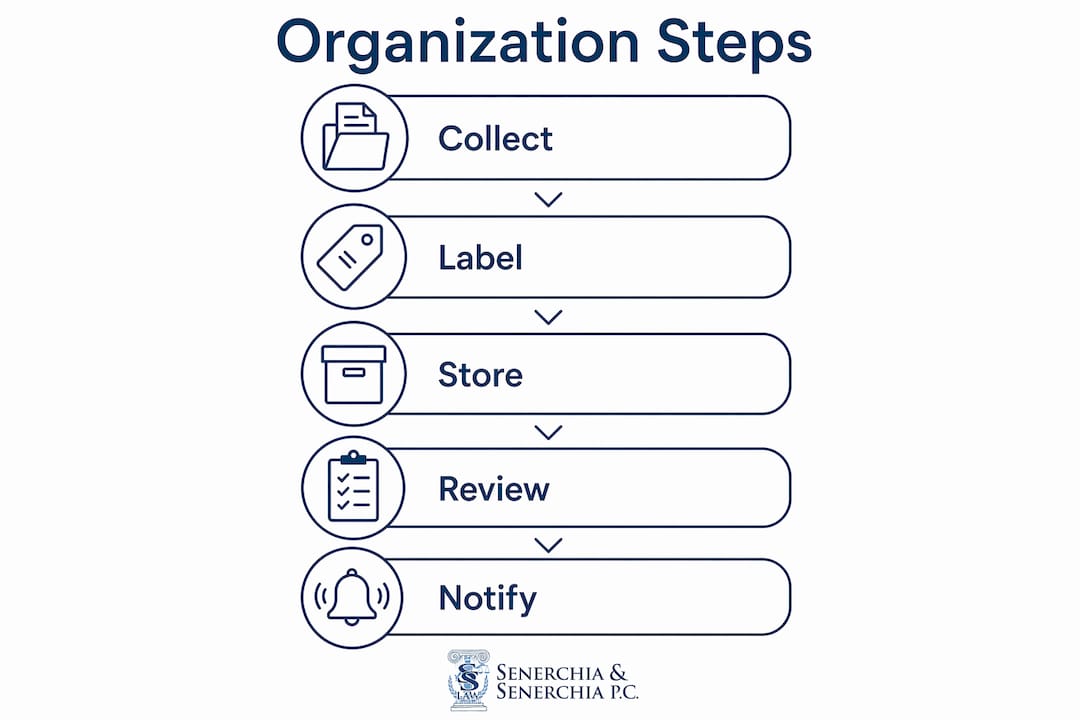
A comprehensive estate plan covers asset distribution, healthcare decisions, and legal authority designation. Each document in your binder serves a specific, non-overlapping purpose, which is why every slot matters. Here is what belongs in a complete estate planning master binder:
Core legal documents:
- Last Will and Testament: Directs how your assets are distributed and names a guardian for minor children.
- Revocable Living Trust: Acts as a container that holds your assets during your lifetime and transfers them to beneficiaries without probate court involvement.
- Durable Financial Power of Attorney: Grants a trusted person legal authority to manage your finances if you become incapacitated.
- Advance Healthcare Directive (Living Will): Specifies your medical treatment preferences when you cannot speak for yourself.
- Healthcare Power of Attorney: Names someone to make medical decisions on your behalf.
- HIPAA Authorization Form: Allows designated individuals to access your medical records.
Supporting documents:
- Property deeds and vehicle titles
- Life insurance policies and annuity contracts
- Retirement account statements with beneficiary designations
- Bank and investment account information
- Funeral and burial instructions
- Digital asset inventory with login credentials stored separately and securely
Label each section with a tabbed divider and include a one-page cover sheet at the front listing every document, its location, and the name and contact information of your attorney. That cover sheet alone can save your executor hours of confusion during an already difficult time.
How should you store original and backup estate documents?
Knowing which documents to collect is only half the work. Where and how you store them determines whether your family can actually use them. The three-location storage strategy is the most reliable method: keep originals in a fireproof home safe, provide accessible copies to a trusted family member or executor, and store duplicates with your estate planning attorney or a secondary trusted contact.
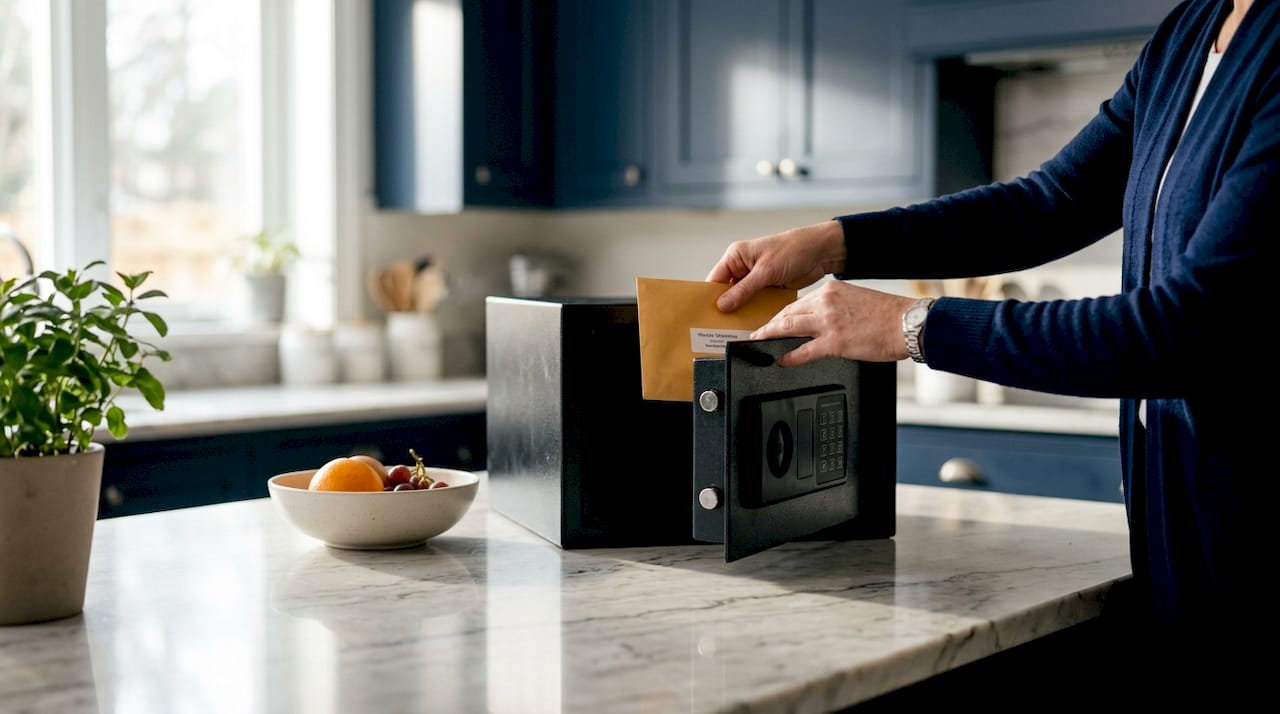
This three-layer approach protects against fire, flood, and the very common problem of documents being locked away where no one can reach them after death. That last point is more serious than most people realize.
Here is a step-by-step approach to setting up your storage system:
- Purchase a fireproof, waterproof home safe. Store all original signed documents here. Choose a model rated for at least one hour of fire protection at 1,700°F, which covers most residential fires. Bolt it to a floor or wall stud so it cannot be removed.
- Create a certified copy set for your executor. Your attorney can provide certified copies of your will and trust. Give these directly to your named executor along with the safe combination or key location.
- Leave a duplicate set with your attorney. Estate planning attorneys routinely hold client document copies. This provides a reliable third location that is professionally managed and legally accessible.
- Avoid relying solely on a bank safe deposit box. Safe deposit boxes can require a court order to open after death, which defeats the purpose of having accessible documents and can delay probate significantly.
- Create a digital supplement. Scan all documents and store them in a secure, encrypted cloud service. This is a backup reference tool, not a replacement for originals.
Pro Tip: Write a one-page “Location Letter” that tells your executor exactly where each document is stored, who holds copies, and how to access your home safe. Seal it in an envelope labeled “Open Immediately” and keep it somewhere obvious, like taped inside a kitchen cabinet door.
The accessibility of documents is just as important as their security. An overly complex system, one with multiple passwords, obscure filing codes, or documents scattered across locations, can paralyze executors during critical moments.
How do you organize estate documents for probate?
Probate is the court-supervised process of validating a will and distributing a deceased person’s assets. Executors who walk into probate court with a disorganized file face delays, court rejections, and in some states, personal financial liability. Timely inventories and reports are required by probate courts, with deadlines that vary by state. Missing them is not a minor inconvenience. It can expose the executor to personal liability for estate losses.
Organizing your documents with probate in mind means sorting them into three clear phases:
- Opening probate: Original will, death certificate (multiple certified copies), petition for probate, list of heirs and beneficiaries, and any existing trust documents.
- Ongoing administration: Asset inventory with valuations, bank statements, tax returns, creditor notices, receipts for estate expenses, and correspondence with beneficiaries.
- Closing probate: Final accounting of all income and distributions, receipts signed by beneficiaries, court petitions for discharge, and proof of tax filings.
Keep all documents in chronological order within each phase. Number every page and use a running log that records what was filed, when, and with which court. This level of detail protects the executor and speeds up court review.
| Probate phase | Key documents needed |
|---|---|
| Opening | Will, death certificate, petition for probate, heir list |
| Ongoing administration | Asset inventory, bank records, creditor notices, tax returns |
| Closing | Final accounting, beneficiary receipts, discharge petition |
Meticulous organization allows self-represented executors to manage straightforward estates without expensive legal assistance at every step. Good records reduce the need for attorney intervention and keep the process moving.
When and how should you review your estate planning system?
Creating a master binder is not a one-time task. Outdated estate documents cause family disputes and probate delays. Experts consistently recommend reviewing your documents at least once a year and immediately after any major life event.
Life events that require a document review include marriage or divorce, the birth or adoption of a child, the death of a named executor or beneficiary, a significant change in assets or debts, and a move to a different state. Each of these events can invalidate existing provisions or create gaps in your plan that a court will have to fill.
When you update a document, destroy the old version completely. Shred physical copies and permanently delete digital files. Leaving outdated versions in your binder creates confusion and, in some cases, legal challenges from parties who find the old document and argue it reflects your true wishes.
Pro Tip: Schedule a 30-minute “estate review” on your calendar every January. Use a simple checklist: confirm all named executors and trustees are still willing and able to serve, verify beneficiary designations on life insurance and retirement accounts match your current wishes, and confirm your attorney has the most recent copies of all documents.
After any update, notify your executor directly. Do not assume they will find the new version on their own. A brief phone call or email confirming the change and its location takes five minutes and prevents significant confusion later.
Paper binders vs. digital estate planning systems: which is better?
The honest answer is that you need both, but they serve different purposes. Paper originals carry legal weight that digital copies do not. Courts, financial institutions, and healthcare providers require original signatures on wills, trusts, and powers of attorney. A scanned PDF of your will is not a substitute in probate court.
| Factor | Paper originals | Digital copies |
|---|---|---|
| Legal validity | Required for court and institutional use | Not accepted as originals |
| Security | Fireproof safe protects against physical loss | Encrypted cloud storage protects against physical loss |
| Accessibility | Requires physical access to location | Accessible from anywhere with credentials |
| Risk | Fire, flood, theft | Account lockout, data breach, forgotten passwords |
| Best use | Primary storage for all signed originals | Backup reference and remote access |
Digital copies alone are insufficient substitutes for paper originals, particularly when two-factor authentication or recovery keys are not shared with trusted contacts. A family member who cannot access your password manager because they do not have the recovery key faces a digital lockout on top of an already difficult situation.
The practical solution is to maintain a physical master binder as your primary system and use a password manager like Bitwarden or 1Password for digital account credentials. Store a printed copy of your master password and recovery keys in your fireproof safe alongside your paper documents. This gives your executor both the physical documents and the digital access they need, without creating a single point of failure.
Key takeaways
Organizing estate planning documents requires a master binder, a three-location storage strategy, and annual reviews to keep the system current and legally valid.
| Point | Details |
|---|---|
| Build a master binder | Collect all core documents including your will, trust, powers of attorney, and healthcare directives in one labeled binder. |
| Use three-location storage | Keep originals in a fireproof home safe, copies with your executor, and duplicates with your attorney. |
| Organize for probate | Sort documents into opening, administration, and closing phases with chronological records and clear labels. |
| Review annually | Update documents after every major life event and destroy outdated versions to prevent legal confusion. |
| Digital supplements paper | Use encrypted cloud storage and password managers as backup tools, never as replacements for signed originals. |
How Senerchia & Senerchia Law can help you get organized
Getting your estate documents in order is one of the most protective things you can do for your family. At Senerchia & Senerchia Law, we work with individuals and families throughout Rhode Island and Southern New England to create clear, organized, and legally sound estate plans. We help you identify which documents you need, draft them correctly, and set up a storage and access system your executor can actually use. If you are concerned about common estate planning mistakes that families make, we can review your existing plan and close the gaps before they become problems. Contact us to schedule a consultation and take the first step toward a plan that protects the people you love. Visit our estate planning services page to learn more about how we can help.
FAQ
What documents should be in an estate planning binder?
A complete estate planning binder includes your Last Will and Testament, Revocable Living Trust, Durable Financial Power of Attorney, Advance Healthcare Directive, HIPAA authorization, property deeds, life insurance policies, and beneficiary designation forms. These documents collectively cover asset distribution, healthcare decisions, and legal authority for a complete estate plan.
Is it safe to store a will in a bank safe deposit box?
Storing a will in a bank safe deposit box is not recommended because courts may require a legal order to open the box after death, which delays probate access. A fireproof home safe with executor access instructions is a more reliable option.
How often should you update your estate planning documents?
Review your estate planning documents at least once a year and immediately after major life events such as marriage, divorce, the birth of a child, or the death of a named executor or beneficiary. Outdated documents are a leading cause of family disputes and probate delays.
Are digital copies of estate documents legally valid?
Digital copies are not accepted as originals by probate courts or financial institutions, which require original signatures on wills, trusts, and powers of attorney. Scanned copies serve as useful backup references but cannot replace physical originals in legal proceedings.
Who should know where your estate documents are stored?
Your named executor, a trusted family member, and your estate planning attorney should all know where your original documents are stored and how to access them. Providing a written location letter with safe combinations or key locations prevents critical delays during emergencies.