


TL;DR:
- Family estate planning involves legal and financial steps to protect assets, name guardians, and ensure heirs’ inheritance. Rhode Island’s fragmented probate system makes trust funding and regular updates crucial to avoid courts deciding your family’s future.
The family estate planning process is the organized set of legal and financial steps families take to protect their assets, appoint guardians for minor children, and secure their heirs’ inheritance. For Rhode Island families, this process carries extra weight. Rhode Island operates 39 separate municipal probate courts, making probate fragmented and costly compared to most other states. Without a clear plan built around documents like wills, revocable living trusts, and powers of attorney, your family’s future gets decided by a court instead of by you.
What are the essential steps in the family estate planning process?
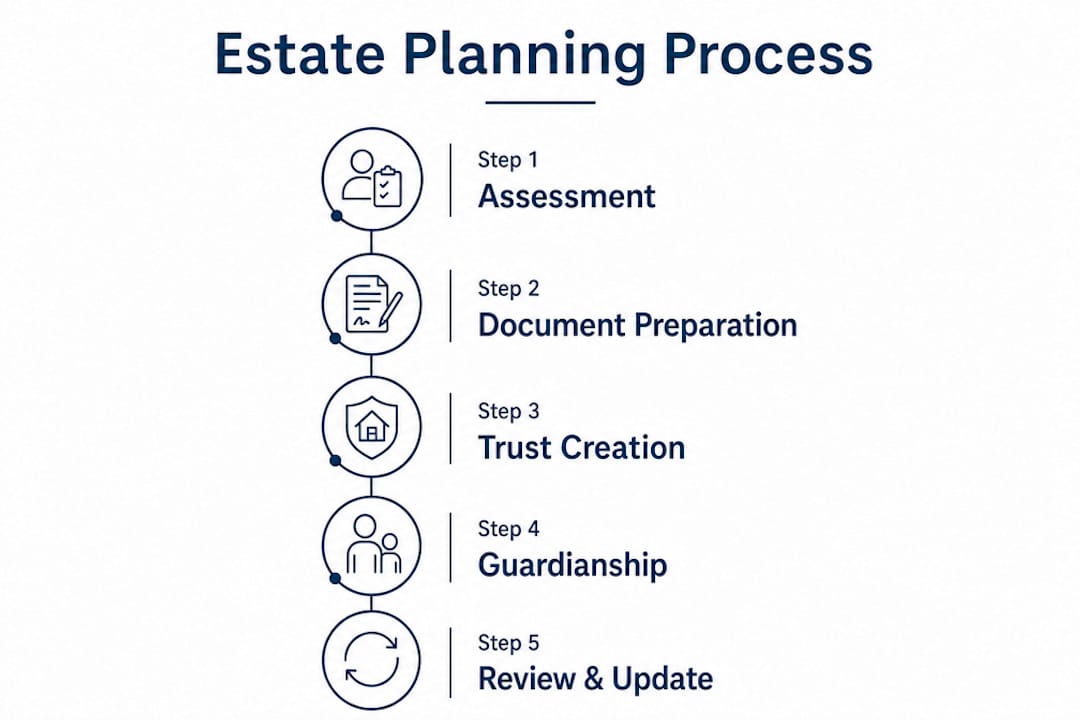
Estate planning is not a single document. It is a sequence of decisions that build on each other. The steps below reflect best practices for Rhode Island families.
- Set your goals. Decide what you want to accomplish. Protecting minor children, avoiding probate, minimizing Rhode Island’s estate tax, and preserving family wealth are the most common priorities.
- Inventory your assets. List everything you own: real estate, bank accounts, retirement accounts, life insurance, and personal property. This inventory shapes every document you draft.
- Name guardians for minor children. Without a formal guardianship designation, a Rhode Island court decides who raises your children. That outcome may not reflect your wishes.
- Draft your core documents. A will, a revocable living trust, a durable power of attorney, and a healthcare directive form the foundation of any solid plan.
- Update beneficiary designations. Retirement accounts and life insurance policies pass outside your will. Outdated beneficiary designations can transfer assets to the wrong person entirely.
- Review and update regularly. Families should review estate plans every 3–5 years or after major life events such as a birth, marriage, divorce, or home purchase.
Pro Tip: Starting with a basic will and guardianship designation is enough for most young families. Plans can grow more complex over time as assets and needs change.
How does Rhode Island’s probate system affect estate planning?

Rhode Island’s probate system is unusually decentralized. Each of the state’s 39 municipalities runs its own probate court, which means procedures, timelines, and costs vary depending on where you live. Probate is also a public process, meaning your assets and family details become part of the court record.
A revocable living trust is the most reliable tool Rhode Island families have to avoid probate entirely. Think of a trust as a container that holds your assets. When you fund the trust properly, those assets transfer directly to your beneficiaries without passing through any probate court. Rhode Island also does not allow transfer-on-death (TOD) deeds for real estate, which makes trusts especially important for families who own property.
Other probate avoidance tools include joint tenancy with right of survivorship, tenancy by the entirety for married couples, and life estate deeds. Each option has trade-offs in terms of control and tax treatment. For most Rhode Island families, a revocable living trust paired with a pour-over will offers the most flexibility and protection.
Pro Tip: Funding your trust matters as much as creating it. A trust that holds no assets still sends your estate through probate. Work with an attorney to retitle your property and accounts into the trust’s name.
What legal documents are critical in a family estate plan?
Each document in an estate plan serves a specific role. Together, they cover your family’s needs during your lifetime and after your death.
- Last will and testament. A will names your executor, designates guardians for minor children, and directs how probate assets are distributed. It does not avoid probate, but it controls what happens inside probate.
- Revocable living trust. A trust holds assets outside of probate and allows a successor trustee to manage property if you become incapacitated. Trust assets remain private and never appear in public court records.
- Durable power of attorney. This document authorizes someone to manage your finances if you cannot. Without a durable power of attorney, your family may face expensive court proceedings just to pay your bills.
- Healthcare directive and healthcare proxy. These documents state your medical wishes and name someone to make healthcare decisions on your behalf.
- Beneficiary designations. These override your will on retirement accounts and life insurance. Review them every time your family situation changes.
- Letter of instruction. This informal document tells your family where to find accounts, passwords, and important contacts. It has no legal force but saves enormous time and stress.
For married couples in Rhode Island, irrevocable trusts and credit shelter trusts also deserve attention. Rhode Island’s estate tax exemption for 2026 is $1,838,056, with rates up to 16% and no portability between spouses. A credit shelter trust lets each spouse use their full exemption, which can save a significant amount in taxes for families with larger estates.
How should families plan for guardianship and children’s inheritance?
Naming a guardian for your minor children is the single most urgent task for parents in Rhode Island. If both parents die without a valid will that names a guardian, a probate court appoints one. The court’s choice may not match your values, your family relationships, or your children’s needs.
When selecting a guardian, consider these factors:
- Shared values. Choose someone whose parenting approach and values align with yours.
- Practical capacity. The person must be willing, financially stable, and physically able to raise your children.
- Geographic stability. A guardian who lives nearby reduces disruption to your children’s school and social life.
- Backup designation. Always name an alternate guardian in case your first choice is unable to serve.
Trusts offer an additional layer of protection for children’s inheritance. Rather than leaving assets outright to a minor, a trust holds those assets and distributes them according to your instructions. You can specify that funds be used for education, released at age 25, or structured in any way that fits your family’s situation. For children with special needs, a special needs trust preserves their eligibility for government benefits while still providing financial support.
Pro Tip: Have a direct conversation with your chosen guardian before finalizing the documents. Confirm they are willing and prepared. This conversation is one of the most important family estate planning conversation starters you will ever have.
When and why should families review their estate plans?
An estate plan is not a one-time task. Life changes, and your plan must keep pace. The standard recommendation is a full review every 3–5 years, but certain events require an immediate update.
- Birth or adoption of a child
- Marriage or divorce
- Purchase or sale of a home in Rhode Island
- Receiving a significant inheritance
- Death of a named guardian, executor, or trustee
- Relocation to or from Rhode Island
- Changes to Rhode Island’s estate tax laws or probate rules
Outdated plans cause real harm. A beneficiary designation that still names an ex-spouse transfers assets directly to that person, regardless of what your will says. A guardianship appointment for someone who has since moved abroad or passed away leaves your children unprotected. Reviewing your plan with an attorney keeps every piece current and legally sound.
Key takeaways
A complete family estate plan built around a revocable living trust, current beneficiary designations, and formal guardianship documents is the most effective way for Rhode Island families to protect their assets and their children.
| Point | Details |
|---|---|
| Start with core documents | A will, trust, power of attorney, and healthcare directive form the foundation of every plan. |
| Trusts avoid probate in Rhode Island | Rhode Island has no TOD deeds, making a revocable living trust the best tool for real estate transfers. |
| Name guardians formally | Without a written guardianship designation, a Rhode Island court appoints one for your children. |
| Review every 3–5 years | Update your plan after births, marriages, divorces, home purchases, or changes in Rhode Island tax law. |
| Beneficiary designations override wills | Keep retirement account and life insurance beneficiaries current to prevent unintended transfers. |
What I’ve learned helping Rhode Island families plan their estates
Most families I work with assume estate planning is something they can handle later, once they have “enough” to worry about. That assumption is the most common and most costly mistake I see. A young couple with a modest home, a retirement account, and two children has more at stake than they realize. If something happens to both parents without a plan in place, a Rhode Island probate court decides who raises those children and how the assets are divided.
Rhode Island’s decentralized probate system surprises people. Many families do not realize that avoiding probate in this state requires deliberate legal steps, not just a will. A will is a starting point, not a finish line. The families who come out of this process feeling genuinely protected are the ones who fund their trusts, update their beneficiary designations, and have honest conversations with their chosen guardians.
The peace of mind that comes from a complete plan is real. You stop worrying about what happens if, and you start knowing that your family is covered. That shift in confidence is worth every hour spent on the process.
— Anthony
How Senerchia & Senerchia Law helps Rhode Island families plan their estates
Senerchia & Senerchia Law works with Rhode Island families at every stage of the estate planning process, from drafting a first will to establishing a fully funded revocable living trust. The firm’s attorneys understand Rhode Island’s 39 municipal probate courts, the state’s estate tax structure, and the specific documents families need to protect their children and their assets. Whether you need a complete set of estate planning documents or a review of an existing plan, Senerchia & Senerchia Law provides clear, practical guidance tailored to your family’s goals. Contact the firm to schedule a consultation and build a plan that protects what matters most.
FAQ
What is the family estate planning process?
The family estate planning process is the organized set of legal steps families take to protect assets, name guardians, and direct inheritance through documents like wills, trusts, and powers of attorney.
Does a will avoid probate in Rhode Island?
A will does not avoid probate in Rhode Island. It directs how probate courts distribute assets, but a revocable living trust is required to bypass probate entirely.
How often should I update my estate plan?
Families should review their estate plans every 3–5 years and immediately after major life events such as a birth, marriage, divorce, or home purchase.
What happens if I die without naming a guardian in Rhode Island?
Without a written guardianship designation in your will, a Rhode Island probate court appoints a guardian for your minor children, and that decision may not reflect your wishes.
What is Rhode Island’s estate tax exemption in 2026?
Rhode Island’s estate tax exemption for 2026 is $1,838,056, with rates up to 16% and no portability between spouses, making credit shelter trusts an important planning tool for married couples.