


TL;DR:
- Estate planning for new parents in Rhode Island involves creating key documents like wills, trusts, powers of attorney, and guardianship plans to protect children’s future assets and care. Properly updating beneficiary designations and purchasing life insurance prevents gaps that court decisions or outdated paperwork can cause. Rhode Island’s estate tax rules and guardianship laws emphasize early, coordinated planning to safeguard family interests.
Estate planning for new parents in Rhode Island is the process of creating legal and financial arrangements to protect your child’s future, designate guardianship, and manage assets under Rhode Island’s specific laws. A new baby changes everything, including what happens to your money, your home, and your child if something happens to you. Without a plan in place, Rhode Island’s probate court makes those decisions for you. The good news is that the core documents are straightforward, and getting started early gives your family real, enforceable protection.
What are the essential estate planning documents every new parent in Rhode Island needs?
Four critical documents form the foundation of every new parent’s estate plan: a will, term life insurance, a healthcare proxy, and a financial power of attorney. Each one serves a distinct purpose, and skipping any one of them leaves a gap that the others cannot fill.
- Will. A will is the only legal document that lets you name a guardian for your minor child in Rhode Island. It also directs how your assets are distributed after death. Without one, the court decides both.
- Term life insurance. Insurance provides the financial foundation your child needs if you die before they reach adulthood. A will controls where assets go; insurance creates the assets in the first place.
- Healthcare proxy / medical power of attorney. This document names someone to make medical decisions for you if you become incapacitated. Without it, your family may face delays or disputes during a medical crisis.
- Financial power of attorney. This authorizes a trusted person to manage your finances if you are alive but unable to act. It covers bill payments, bank accounts, and property management during incapacity.
One of the most common mistakes new parents make is having a will but no life insurance, or insurance but no will. Both serve different essential functions and are not interchangeable. A will without insurance leaves your child legally protected but financially underfunded. Insurance without a will leaves money available but no legal structure to manage it.
Pro Tip: Name a backup guardian in your will. Life circumstances change, and your first choice may not be available or willing when the time comes.

How does guardianship for minor children work in Rhode Island?
Rhode Island probate court appoints guardians for minor children when parents are unable to care for them. The court can tailor guardianship appointments, separating personal care from financial management if needed. That flexibility sounds reassuring, but it also means a judge, not you, makes the final call if you have not documented your wishes.
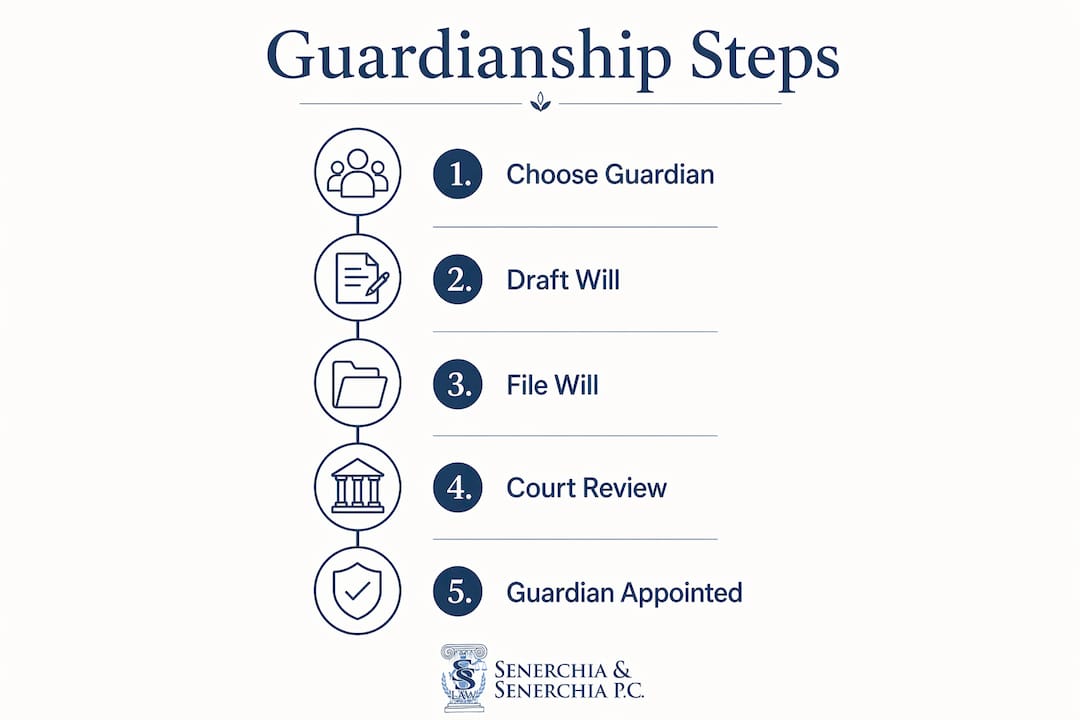
Both parents are joint natural guardians of their children under Rhode Island law. If one parent dies, the surviving parent typically assumes full guardianship. The real risk arises when both parents die simultaneously or become incapacitated at the same time, which is exactly the scenario a will addresses.
Without a will, the court considers relatives and other interested parties, but it is not bound by your preferences. The person you would have chosen may not be the person appointed. That outcome is avoidable with a single document.
When choosing a guardian, think beyond love and trust. Consider these practical factors:
- Geographic location and willingness to relocate your child
- Parenting values and lifestyle alignment with your own
- Financial stability and capacity to take on additional responsibility
- Age and health of the potential guardian
- Existing relationship with your child
A will is the only mechanism that legally directs the court toward your preferred guardian. Courts give significant weight to a parent’s documented wishes, making a properly drafted will the most powerful guardianship tool available to you.
What strategies help new parents manage inheritance and financial assets for minor children?
Minors cannot legally hold or manage assets directly in Rhode Island. If you leave money or property outright to a child under 18, the probate court appoints a conservator to manage those assets until the child reaches adulthood. That process is slow, public, and expensive. A trust solves this problem cleanly.
Revocable living trusts vs. leaving assets outright
| Approach | Control | Probate | Privacy | Cost |
|---|---|---|---|---|
| Outright to minor | Court-managed conservatorship | Subject to probate | Public record | Court fees apply |
| Revocable living trust | Trustee manages per your terms | Avoids probate | Private | Attorney drafting fee |
A revocable living trust acts as a container that holds your assets during your lifetime and distributes them according to your instructions after death. You remain in full control while you are alive. After death, a named trustee manages and distributes assets to your child on the schedule you set, whether that is at age 25, 30, or in stages.
Rhode Island does not offer transfer-on-death deeds for real estate. That makes revocable living trusts the primary tool for keeping your home out of probate. Placing your home in a trust also protects against ancillary probate if you own property in multiple states.
Pro Tip: Fund your trust properly. A trust that holds no assets provides no protection. Work with an attorney to retitle your home, bank accounts, and investment accounts into the trust’s name.
Beneficiary designations on life insurance policies, retirement accounts, and bank accounts pass assets directly to named individuals, bypassing your will entirely. This is one of the most direct and frequently overlooked mechanisms in estate planning. If your beneficiary designation names your spouse but not a contingent beneficiary for your child, and your spouse dies before you, those assets could end up in probate.
Coordinating guardianship nominations with trust funding is the step most new parents miss. The guardian cares for your child day to day. The trustee manages the money. These can be the same person or different people, and the distinction matters. Separating the roles creates a natural check on how funds are spent.
How does Rhode Island’s estate tax affect new parent estate planning?
Rhode Island’s estate tax exemption for 2026 is $1,838,056, with graduated rates ranging from 0.8% to 16%. That exemption applies per person, not per couple. Rhode Island does not offer portability of a deceased spouse’s unused exemption, which is a critical distinction from federal estate tax rules.
| Rhode Island Estate Tax Detail | 2026 Value |
|---|---|
| Exemption amount | $1,838,056 |
| Lowest rate | 0.8% |
| Highest rate | 16% |
| Spousal portability | Not available |
For most new parents, the estate tax is not an immediate concern. A young family with a modest home and early retirement savings typically falls well below the exemption threshold. But life insurance changes the math quickly. A $1,000,000 term life policy added to a home worth $500,000 and retirement accounts of $400,000 puts a surviving spouse close to the exemption limit.
The absence of spousal portability means that when the first spouse dies, their unused exemption disappears. A credit shelter trust, sometimes called a bypass trust, captures that exemption at the first death and keeps those assets out of the surviving spouse’s taxable estate. For couples with growing assets, this trust structure can prevent a significant tax bill at the second death.
An irrevocable life insurance trust, known as an ILIT, removes life insurance proceeds from your taxable estate entirely. The trust owns the policy, so the death benefit does not count toward your estate’s value. For new parents purchasing large term policies, an ILIT is worth discussing with an estate planning attorney.
What immediate steps should Rhode Island new parents take after their baby is born?
The birth of a child triggers a specific set of legal and financial updates. Waiting too long on any of these creates gaps in your family’s protection.
- Update beneficiary designations. Review life insurance policies, retirement accounts (401(k), IRA), and bank accounts. Add your child as a contingent beneficiary, not a primary, since minors cannot receive assets directly without court involvement.
- Purchase or increase term life insurance. Calculate coverage based on income replacement, childcare costs, and education expenses. Most financial planners recommend coverage equal to 10 to 12 times your annual income.
- Update your health insurance within 30 days. Adding a newborn to your health plan must happen within 30 days of birth. Missing this window means waiting until the next open enrollment period.
- Draft or revise your will. If you already have a will, review it with an attorney to reflect your new family structure. Name your child’s guardian and update asset distribution instructions.
- Review and revise your powers of attorney and healthcare proxy. Confirm your named agents still reflect your current wishes and relationships.
New-parent estate planning works best in stages. Secure the guardianship and control documents first. Then build out trusts and tax strategies as your assets grow. The Rhode Island estate planning checklist from Senerchia & Senerchia Law walks through each step in sequence, which helps you prioritize without missing anything.
Even a well-drafted will does not override beneficiary designations. Asset titling and beneficiary forms control the majority of what most families own. Getting these aligned with your will and trust is the single most impactful thing you can do in the weeks after your baby arrives.
Senerchia & Senerchia Law is ready to help Rhode Island new parents
Protecting your child’s future starts with the right legal documents, drafted correctly and tailored to Rhode Island law. Senerchia & Senerchia Law works with new parents across Rhode Island to create wills, trusts, powers of attorney, and guardianship plans that reflect each family’s unique circumstances. The firm understands Rhode Island’s probate process, estate tax rules, and the specific steps that matter most after a child is born. Whether you are starting from scratch or updating an existing plan, their attorneys provide clear guidance without the legal jargon. Review the estate planning documents Senerchia & Senerchia Law drafts for families, or schedule a consultation to get started.
Key takeaways
Rhode Island new parents protect their children most effectively by combining a guardian-naming will, a funded trust, updated beneficiary designations, and term life insurance into a coordinated plan.
| Point | Details |
|---|---|
| Will names the guardian | A will is the only legal document that directs Rhode Island courts to your chosen guardian. |
| Trusts manage assets for minors | Minors cannot hold assets directly; a trust appoints a trustee to manage funds on your terms. |
| Beneficiary designations override wills | Update insurance and retirement account beneficiaries immediately after birth to avoid probate. |
| Rhode Island estate tax has no portability | The 2026 exemption is $1,838,056 per person; credit shelter trusts protect unused exemptions. |
| Stage your planning | Secure guardianship documents first, then add trusts and tax strategies as your assets grow. |
FAQ
What happens if I die without a will in Rhode Island?
Without a will, Rhode Island probate court appoints a guardian for your minor children and distributes your assets according to state intestacy laws, not your personal wishes. The court is not required to choose the person you would have selected.
Can I name a guardian for my child without a will?
No. A will is the only legal document that allows you to name a guardian for a minor child in Rhode Island. Any other arrangement is informal and unenforceable in probate court.
Do I need a trust if I already have a will?
A will and a trust serve different purposes. A will directs asset distribution but goes through probate. A revocable living trust avoids probate, keeps real estate transfers private, and lets a trustee manage assets for your child without court supervision.
When should I update my beneficiary designations after my baby is born?
Update beneficiary designations as soon as possible after birth, and complete health plan changes within 30 days. Beneficiary forms on life insurance and retirement accounts override your will, so outdated designations can send assets in the wrong direction.
Does Rhode Island have an estate tax?
Yes. Rhode Island’s 2026 estate tax exemption is $1,838,056 per person, with rates from 0.8% to 16%. Rhode Island does not allow a surviving spouse to use the deceased spouse’s unused exemption, making credit shelter trusts an important planning tool for growing families.